
Full mechanical concrete polishing
When Polished Concrete Fits Better than Epoxy in DFW
Epoxy creates a resin surface; polished concrete refines the slab itself. If visible aggregate and natural concrete variation suit your DFW space, a mechanical finish may be the better direction.
Concrete polishing is full mechanical diamond polishing that refines your existing slab into a finished floor with the sheen you choose. Red Diamond Epoxy focuses on epoxy systems. Diamond Flooring Solutions, a separate brand under the same ownership, handles mechanical polishing and evaluates slab condition, aggregate exposure, and sheen before planning that work.
Explore Polishing with Diamond Flooring SolutionsKey Facts
- Service
- Full mechanical concrete polishing
- Area served
- Dallas–Fort Worth
- Process
- Slab evaluation → multi-grit diamond grinding → densifier → polish to the chosen sheen → guard/sealer and handover
- Timeline
- Confirmed after we evaluate your slab
What Is Polished Concrete?
Full mechanical polishing creates the finish in the concrete slab itself. Progressively finer diamond abrasives refine the surface, while densification helps harden it. Natural color, stone and existing repairs remain part of the finished floor.
This is distinct from grind and seal concrete flooring, which prepares the surface mechanically and uses a topical sealer to create its finish. Diamond Flooring Solutions handles both mechanical systems; Red Diamond Epoxy remains the epoxy coating brand.
How Does Concrete Polishing Work?
- 01
Slab evaluation
Review moisture, hardness, existing coatings, cracks, and repairs, then agree on achievable exposure and sheen.
- 02
Multi-grit diamond grinding
Remove unsuitable surface materials and refine the concrete through a sequence matched to the slab and desired aggregate exposure.
- 03
Densifier
Apply a concrete densifier at the appropriate stage to help harden the surface before the finer polishing passes.
- 04
Polish to the chosen sheen
Continue through finer diamond abrasives to develop the agreed low sheen, satin, or higher-gloss finish.
- 05
Guard/sealer and handover
Apply the selected finishing protection and explain cleaning, maintenance, and return-to-use requirements.
Sheen and Aggregate-Exposure Options
Choose a low-sheen or matte direction for an understated interior, satin for balanced reflection, or higher gloss where stronger light reflection suits the space. Sheen is selected separately from the amount of aggregate exposed.
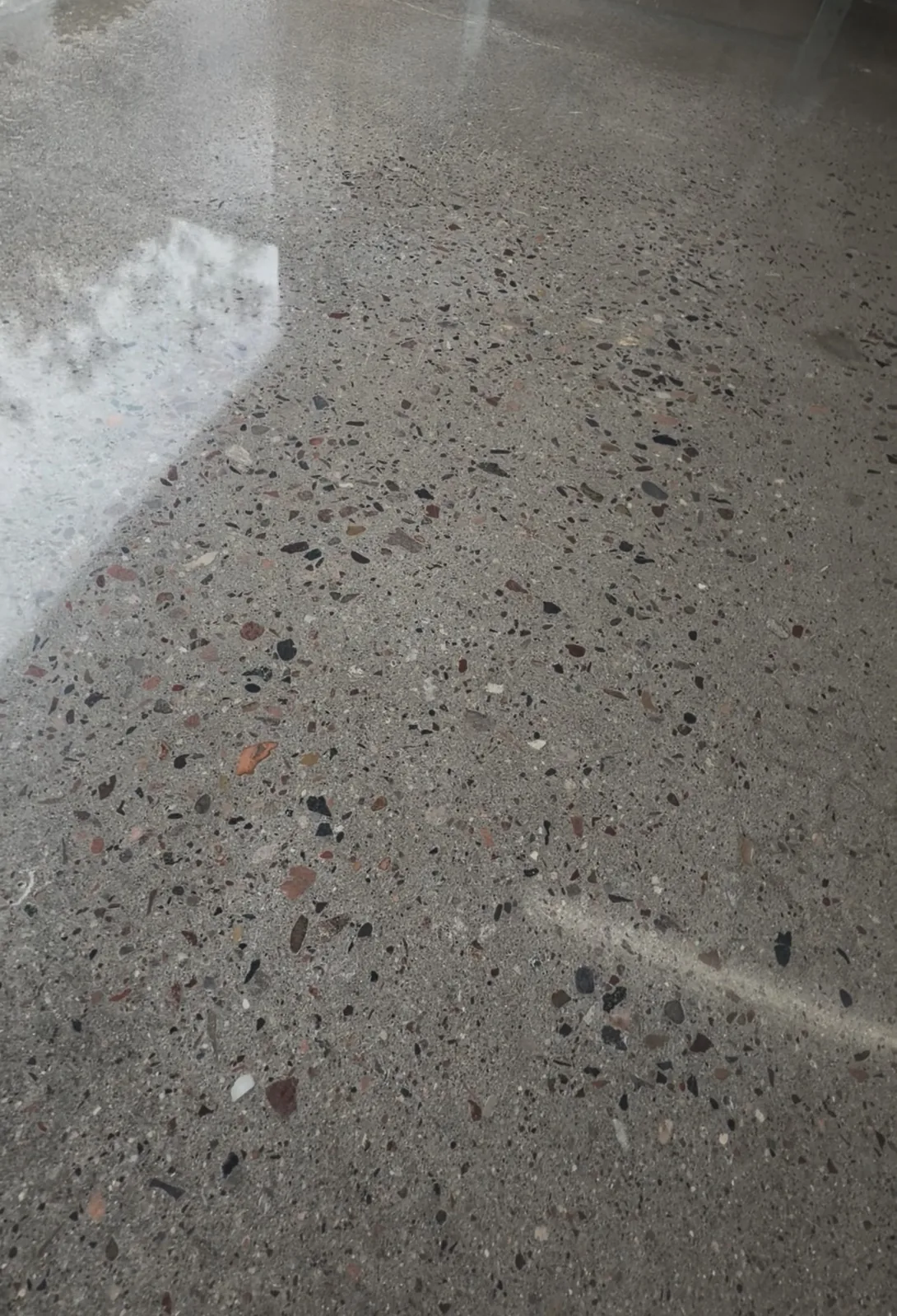
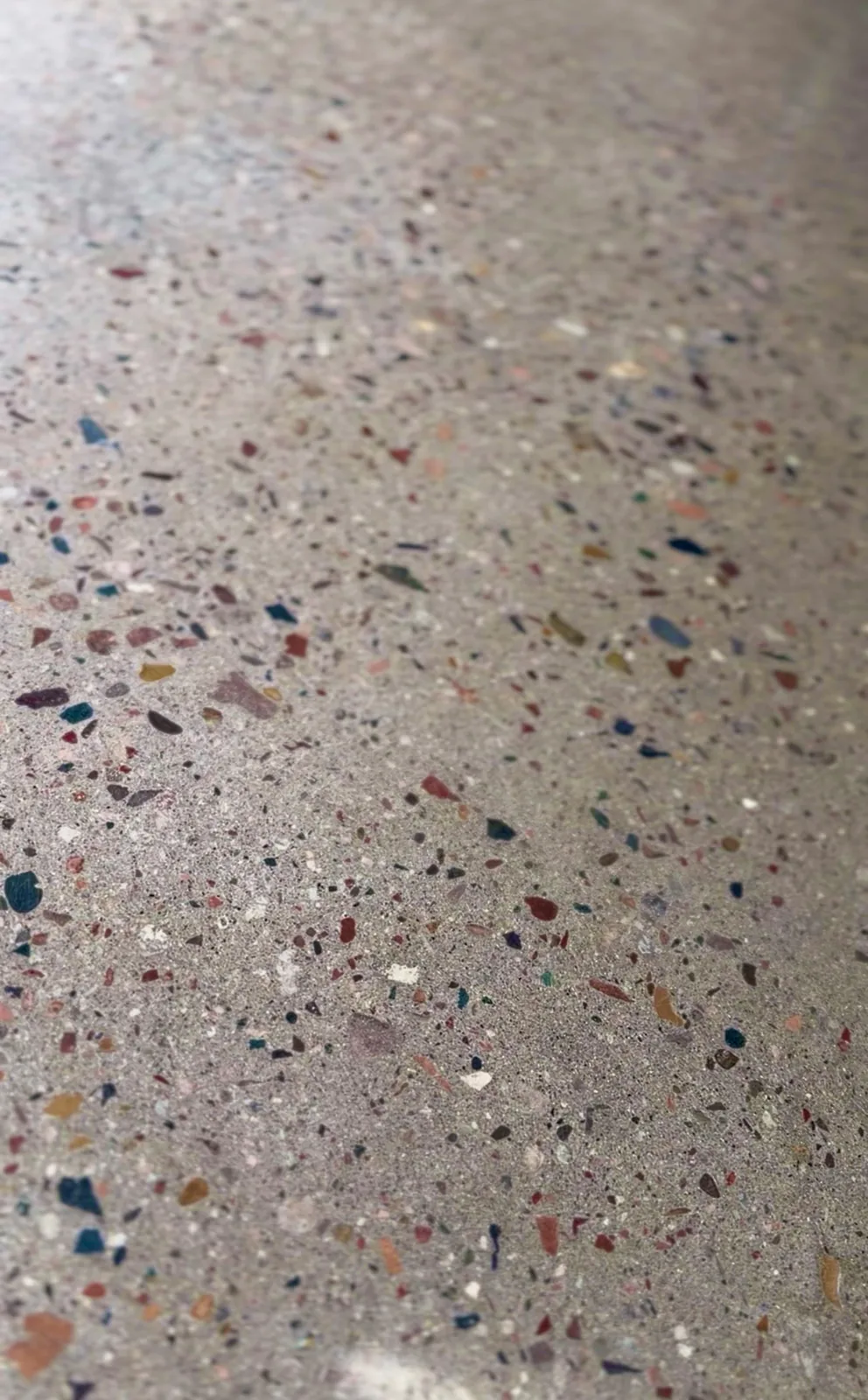
Minimal exposure retains more of the slab surface; fine exposure reveals small aggregate; deeper grinding reveals larger stone where the slab allows it. Concrete is not uniform, so patches, pour differences, and aggregate distribution can stay visible. We discuss these limits before work begins.
Polished Concrete vs Grind and Seal vs Epoxy
| System | Finish | Maintenance and selection |
|---|---|---|
| Polished Concrete | Mechanical refinement within the slab; natural aggregate remains visible. | Routine cleaning and guard care; assess repairs, exposure, and traffic. |
| Grind and Seal | Mechanically ground slab with a topical protective sealer. | Regular cleaning and periodic sealer renewal matched to wear. |
| Metallic Epoxy / Commercial Epoxy | Resin surface with decorative or purpose-specified coating options. | Choose the buildup for moisture, spills, texture, and operational needs. |
Where Does Polished Concrete Work Best?
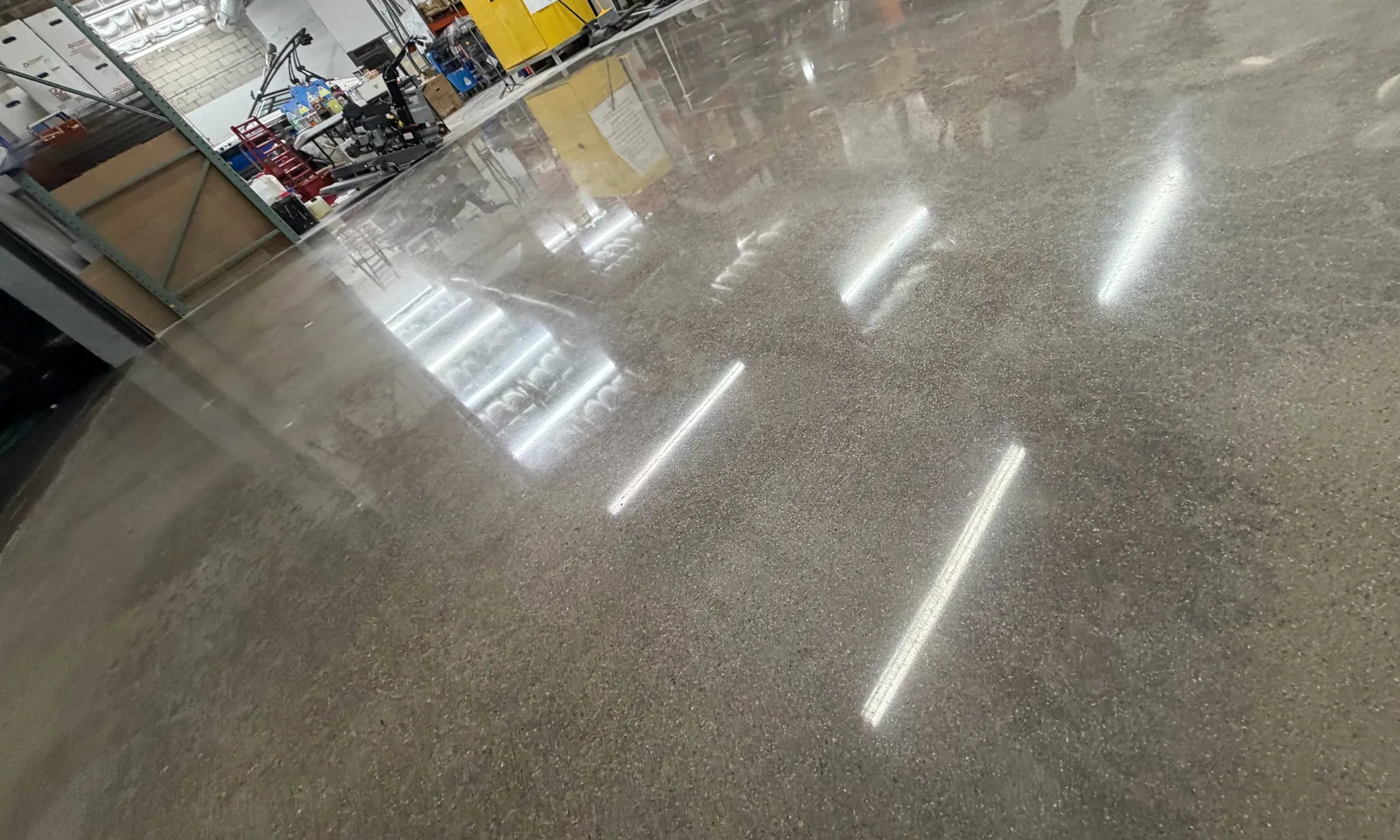
Commercial interiors and retail can benefit from the natural concrete aesthetic. Warehouses need an assessment of abrasion, joints, dust control and maintenance access; polishing is not a substitute for repairing damaged traffic lanes.
Residential spaces and garages can also suit polishing when the slab condition and intended use support it. Oil spills, wet areas and chemical exposure deserve particular attention. Where a protective resin coating is more appropriate, compare our flake epoxy garage floors before selecting a system.
Concrete Polishing Across Dallas–Fort Worth
Compare local epoxy flooring considerations across the DFW metroplex, from older commercial concrete to newer residential pours. For mechanical polishing, contact Diamond Flooring Solutions.
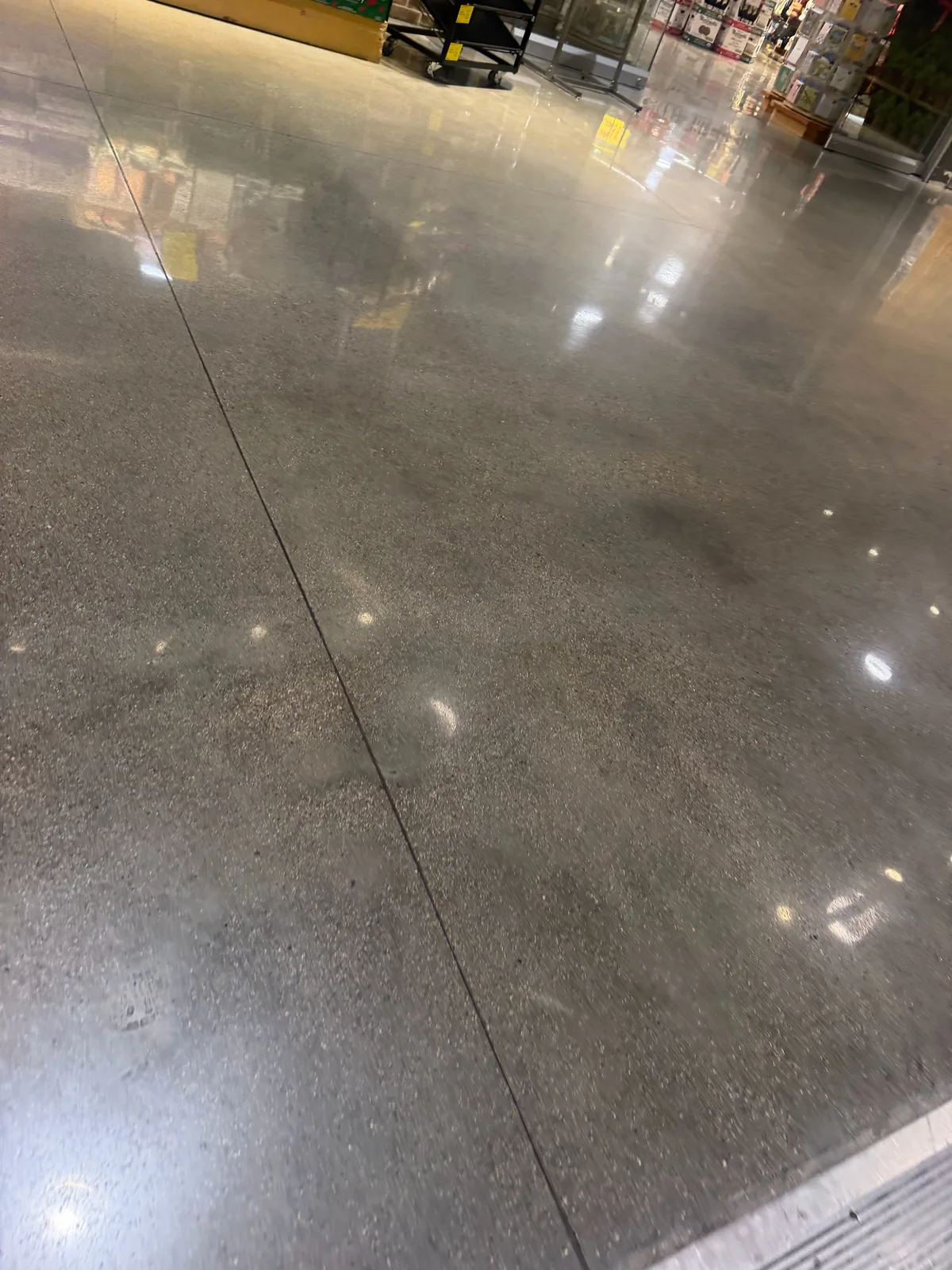
Concrete Polishing Project Photos
Concrete Polishing FAQs
What is mechanically polished concrete?
How is polishing different from grind and seal?
Should I choose polished concrete or epoxy?
What sheen and aggregate options can I choose?
Where does polished concrete work well?
How do I maintain a polished concrete floor?
How long does concrete polishing take?
Do you provide concrete polishing across Dallas–Fort Worth?
Discuss a Mechanical Finish with Diamond Flooring Solutions
Take your slab condition, intended use, and preferred sheen to the mechanical-finish team, or compare epoxy systems here before deciding.