
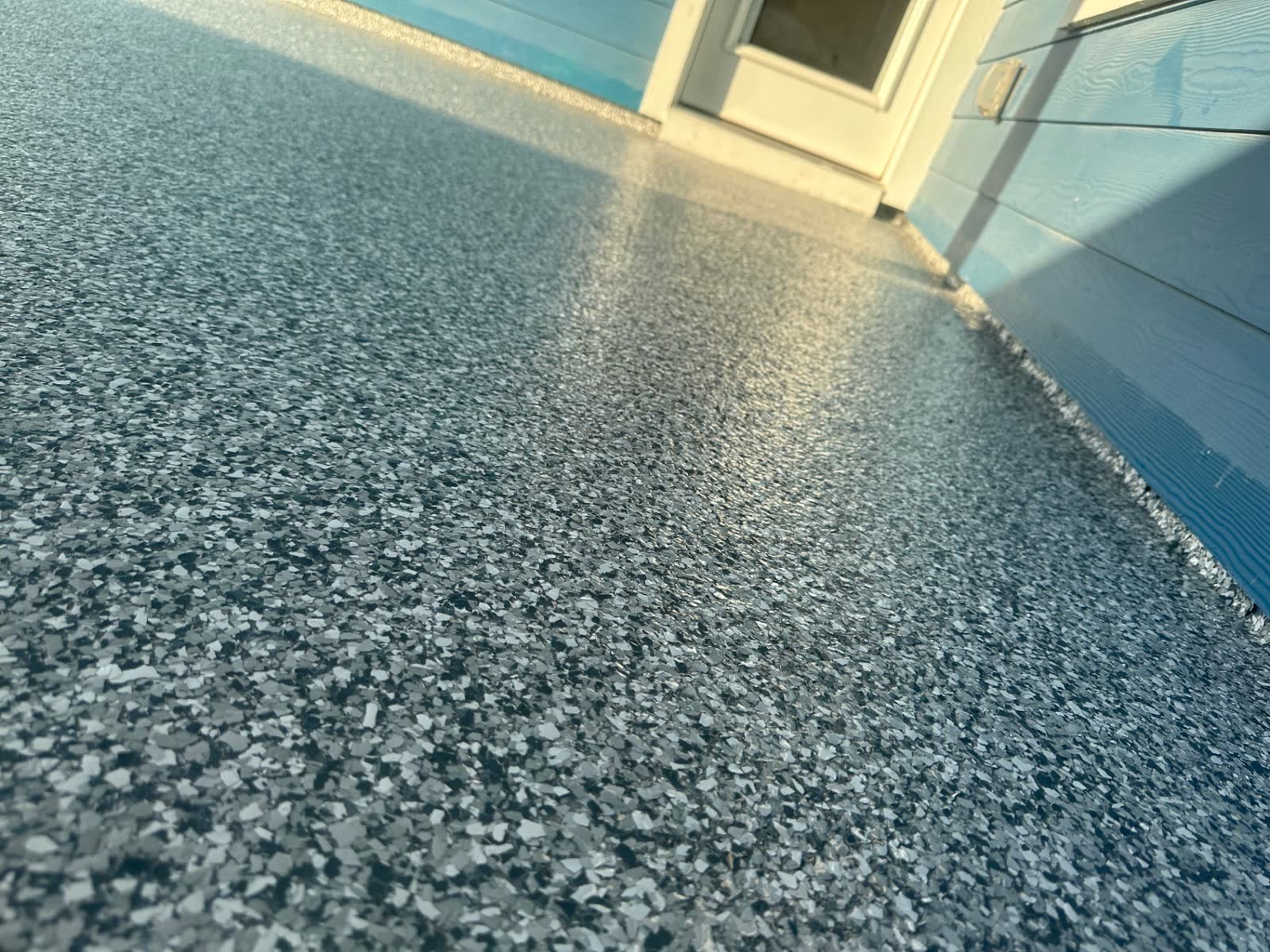
What Is a Polyaspartic Floor Coating?
Polyaspartic is a type of aliphatic polyurea coating. It is applied as a liquid, reacts quickly, and cures into a hard, clear or pigmented film. On concrete floors it is used as a full system, as a base or build coat in some products, and most commonly as a protective topcoat over decorative flake or epoxy layers.
Compared with traditional epoxy, polyaspartic chemistry reacts much faster. That speed shortens the time between coats and the time before a floor can return to light use. It also requires an experienced crew, because the working time on the floor is shorter and the material must be mixed, spread, and back-rolled with care.
Fast Cure and Quicker Return to Service
The main reason property owners ask about polyaspartic is downtime. Because the coating cures faster than many epoxies, a polyaspartic topcoat can reduce the waiting period before foot traffic and, later, vehicle traffic. Actual timing depends on the product, the number of coats, temperature, humidity, and the condition of the slab, so we confirm the schedule for your floor during the estimate.
For homeowners, a faster cure can mean less time with cars parked in the driveway. For businesses, it can mean a shorter closure for a showroom, shop, or service area. Our residential projects typically fit a 2–3 day window, and we plan commercial work around your operating hours.
UV Stability for Bright and Outdoor Areas
Many epoxies can amber or yellow when exposed to sunlight. Aliphatic polyaspartic topcoats are UV stable, so they resist yellowing much better. That makes them a strong choice for garages with open doors and west-facing light, covered patios, pool-adjacent walkways, and areas next to driveways where Texas sun reaches the floor.
For fully exposed outdoor concrete, we also review drainage, slope, slip resistance, and the existing surface. A clear UV-stable topcoat helps protect the look of a flake broadcast, but it does not correct structural cracks, standing water, or failed concrete. We explain those limits before recommending an outdoor system.
Where Polyaspartic Coatings Work Well
Residential garages are the most common application. A flake system with a polyaspartic topcoat offers texture options, color choices from our 57 Torginol blends, and a finish that cleans easily after hot tires, road grime, and spills. Patios and covered outdoor living areas are another good fit because of the coating's UV stability.
Commercial spaces such as showrooms, retail floors, auto service bays, and light industrial areas use polyaspartic when quick turnaround matters. For heavier chemical exposure or thicker build requirements, we may recommend a different commercial epoxy specification. The right answer depends on traffic, chemicals, cleaning methods, and how long the space can be closed.
Surface Preparation: Diamond Grinding Comes First
Every polyaspartic system we install begins with mechanical preparation. We diamond-grind the concrete to remove weak surface paste, sealers, and contamination, and to open the pores so the first coat can bond. Acid etching and rolled-on kits skip this step, and that is where many peeling floors begin.
We also assess slab moisture and install a moisture vapor barrier on every slab we coat. Moisture moving up through concrete can push coatings off the floor, so we treat MVB as a standard part of the system rather than an option.
Our Polyaspartic Installation Process
1. Preparation: we protect the space, diamond-grind the slab, and vacuum the dust. 2. Crack and spall repair: we fill cracks, divots, and damaged areas so they do not telegraph through the finish. 3. Base coat: we apply the moisture vapor barrier and the base coat specified for your system.
4. Flake broadcast, if chosen: we broadcast decorative vinyl flake to the coverage you selected, then scrape and vacuum the excess. 5. Polyaspartic topcoat: we apply the clear polyaspartic topcoat, adjusting texture for slip resistance where needed. We then walk you through cure timing and care before the floor goes back into service.
Polyaspartic Coatings Across Dallas–Fort Worth
We install polyaspartic floor coatings in Dallas, Fort Worth, and communities across DFW, including Plano, Frisco, Arlington, Irving, McKinney, and Denton. Typical DFW flake systems are $7–$12 / sq ft, and a standard two-car garage often lands around $3,500–$6,000. These are typical ranges that vary with slab condition, repairs, access, and system choice; our cost guide explains what changes a quote.
Not sure whether polyaspartic or epoxy fits your floor? Our comparison guide covers cure time, UV stability, working time, and appearance options. Or call (941) 780-8070 for a free on-site estimate, and we will recommend a system based on your slab and how you use the space.