
A Garage Floor Is More Than a Color Choice
A garage collects hot tires, road grit, water, engine oil, and tools in a way that an indoor living space usually does not. Parking remains the primary job for some DFW garages; others also contain a workbench, exercise mats, cabinets, or a display vehicle. Those uses affect the coating, topcoat, and texture. Discuss where vehicles turn, where water enters, and which products you use for cleaning before selecting a finish from a photograph.
Peeling at tire paths or a coating that lifts from a smooth slab can point to inadequate preparation, contamination, or an unsuitable coating buildup. Moisture moving through concrete can also interfere with adhesion. A fresh decorative coat does not resolve those conditions underneath it. Our estimate separates the work needed to prepare the substrate from the decorative layers so you can compare the actual installation rather than just the advertised color.
Diamond Grinding, Repairs, and Moisture Control
Mechanical preparation opens the concrete surface for the specified resin. Diamond grinding removes incompatible material and produces a bonding profile; the preparation method is selected around the existing surface and coating requirements. An old painted slab, a builder-sealed garage, and bare concrete do not necessarily require the same removal work. Dust control and edge preparation belong in that plan, along with access for the equipment and a fully cleared floor.
Cracks, pitting, and oil stains need assessment before coating. We distinguish a repairable surface defect from active movement, damaged concrete, or water entry that needs separate attention. Oil that has penetrated the substrate may require additional preparation or affect suitability. Moisture testing informs the specification, and every Red Diamond coated slab receives a moisture vapor barrier (MVB). The barrier is a resin-system layer, not a substitute for fixing drainage or structural issues.
Flake, Metallic, or Solid-Color Garage Epoxy Floors?
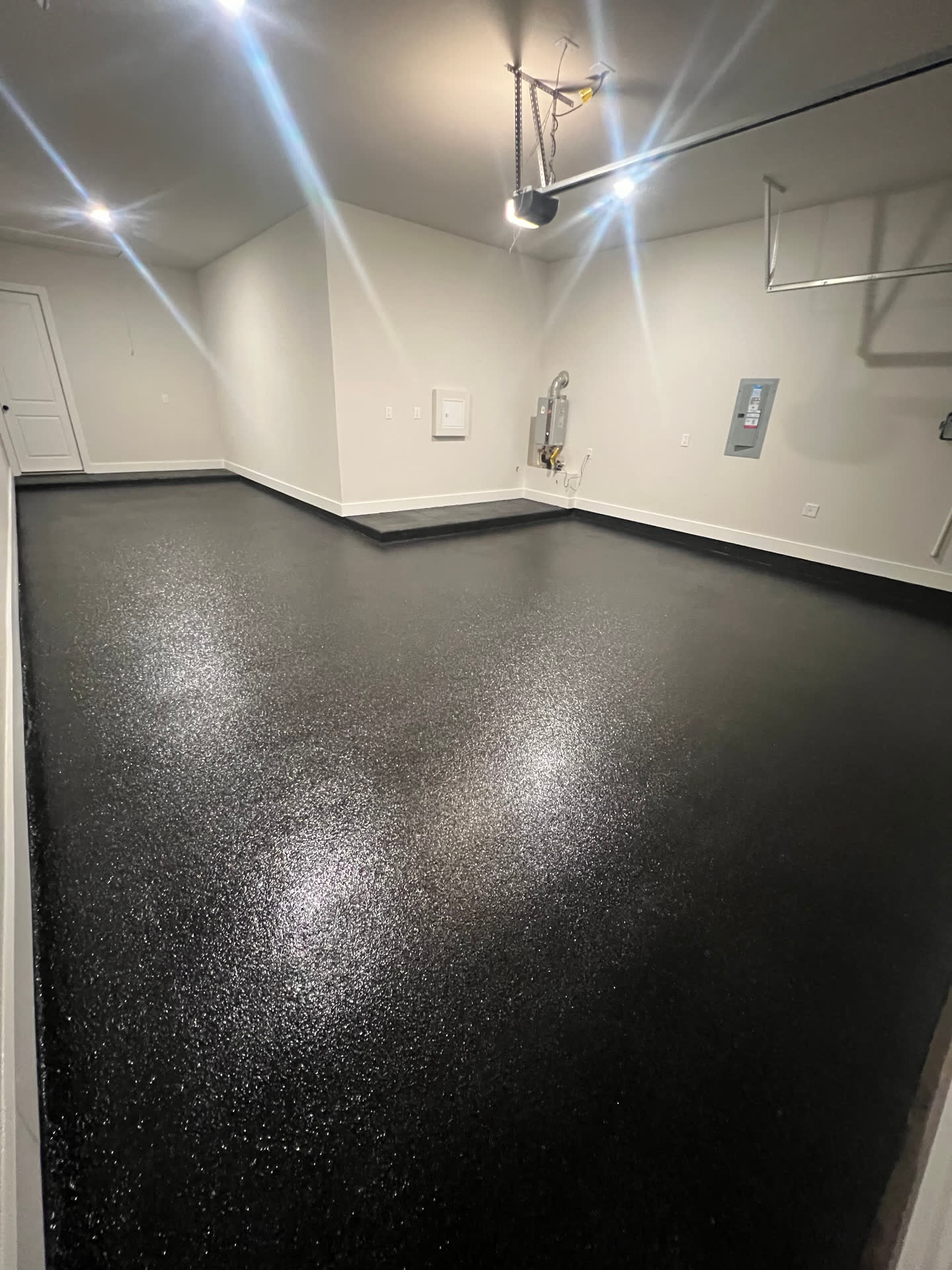
Flake, also called chip epoxy, combines an epoxy base with broadcast decorative chips and a topcoat. Its pattern can suit a working garage with storage and cabinetry. Review chip size, color contrast, and texture together instead of assuming all flake floors feel alike. Our existing catalog includes 57 Torginol blends. A sample viewed beside your walls and cabinets gives a more useful color reference than a small screen image.
Metallic epoxy creates pigment movement and visual depth for a display bay or a garage used as an extension of an interior. Pattern development during application means a sample explains the design direction, not an identical result. Solid-color epoxy offers a simpler appearance when the contents of the garage should remain the focus. All three choices still require an appropriate substrate, vapor control, and a topcoat selected for vehicle contact and cleaning.
Texture, Hot Tires, and Everyday Care
Slip-resistant aggregates can adjust traction, especially near wet thresholds or a utility area. More texture also changes the cleaning routine, so tell us whether you prefer easy mopping, additional grip, or a balance between them. No garage coating should be treated as slip-proof. Standing water, loose grit, and spilled products still need prompt attention, and floor mats may be appropriate where vehicles bring rain into the room.
Hot-tire contact is one consideration in choosing the resin buildup and topcoat, but proper adhesion starts at the concrete. Avoid returning vehicles before the material's required cure window. Sweep grit regularly, clean spills promptly, and use the recommended mild cleaner rather than harsh abrasives. Mats under exercise equipment and care when moving loaded cabinets remain sensible even with a professionally installed resin floor.
Plan the Typical 2–3 Day Residential Window
Many residential installations fit a 2–3 day work window, with preparation and repairs followed by the barrier, decorative coating, and topcoat. Removal-heavy slabs, repair work, weather, and material requirements can change that sequence. Installation completion is not the same as permission to park. We confirm the return-to-use instructions for your selected system and conditions rather than assigning the same vehicle-return time to every garage.
Before work starts, arrange temporary parking and clear stored belongings, shelving, and movable equipment from the slab. Explain whether the garage is your main entrance, whether laundry equipment sits inside, and where preparation equipment can be brought in. Coordinate new cabinet installation with coating access and cure. A realistic access plan prevents the floor from becoming a staging area while the coating layers are still being installed.
What Do Garage Epoxy Floors Cost in DFW?
A standard two-car garage often lands around $3,500–$6,000. Published typical DFW ranges are $7–$12 / sq ft for flake epoxy and $12–$18 / sq ft for metallic epoxy. These are planning ranges, not a quote for an unseen garage. Slab condition, repairs, access, square footage, and system choice influence the written estimate. Our metallic and flake ranges already include MVB, so it should not be added a second time when comparing those figures.
Our quotes start at $7/sq ft rather than $3 because MVB is included. The published MVB add-on range is $2.50–$4 / sq ft when reviewing a scope that separates that layer. Ask what removal, repairs, coating layers, and topcoat are included before comparing totals. Use the DFW epoxy floor cost guide below, then share photos and approximate area for a free on-site assessment in Dallas, Fort Worth, or another DFW city.