
Attached and Detached Dallas Garages Have Different Planning Needs
An attached garage may be the main path from your vehicle into the house. Laundry equipment, a water heater, storage cabinets, and interior door clearances can affect the work sequence. Preparation requires an accessible slab, and coating layers need their specified application and cure windows. Tell us which equipment is fixed and which items can be moved. Planning another entrance and temporary parking is part of making the installation practical for the household.
A detached Oak Cliff or East Dallas garage can bring another set of questions: the width of the approach, threshold drainage, past repairs, and whether different parts of the slab were poured at different times. We inspect those conditions instead of treating the space as a standard rectangular bay. Photos of the driveway and doorway are useful alongside floor photos. They help identify access constraints without replacing the on-site assessment or moisture testing.
Oak Cliff and Lakewood: Read the Existing Floor's History
Established Dallas garages may have old paint, patches, worn edges, and stains left by earlier use. A newer-looking coat can conceal poor adhesion below it. We determine which incompatible layers need removal, inspect damaged areas, and mechanically prepare the substrate for the specified resin. A thicker decorative layer does not make an unsuitable base acceptable. The estimate should show surface removal and repair work rather than fold every preparation task into a finish label.
Lakewood renovations can combine original concrete with an addition or repaired section, and each transition needs review. A moving joint is not simply a cosmetic line to erase. Where slab movement, drainage, or persistent water entry is unresolved, those concerns need separate attention before coating. Epoxy floors are rigid resin finishes, not structural repairs. Keeping that distinction clear helps owners choose a system and scope based on the actual garage rather than a photograph of someone else's result.
Hot Tires, Oil, and the Dallas Garage Threshold
A vehicle returning from a Dallas commute brings warm tires and road grit into the parking area. Oil or automotive products can collect near the same tire paths. We review contamination, coating compatibility, and the intended vehicle use when specifying preparation and topcoat. Deeply absorbed oil may require additional work or affect whether coating is suitable. Cleaning the visible surface alone does not establish that the resin can bond to the concrete underneath.
At an open garage door, daylight, rain carried by vehicles, and exterior concrete meet the interior floor. Discuss where water collects and how the coating terminates at the threshold. Texture is selected around traction and cleaning, not described as slip-proof. A sun-exposed driveway is assessed separately from the garage. An exterior-rated topcoat and drainage review may be needed rather than simply extending the indoor clear coat down the approach.
North Dallas: New Concrete Still Needs Preparation
A clean North Dallas garage can have curing compounds, builder-applied sealer, or moisture that affects the coating specification. The construction date and smooth appearance do not confirm readiness. We inspect the surface, review available slab information, and use moisture assessment before selecting the resin buildup. Outstanding concrete concerns should be resolved with the responsible project team while the slab is still accessible instead of covering them during move-in.
Every garage slab we coat receives an MVB beneath the decorative system. Diamond grinding prepares the bond surface, while crack and stain assessment establish the repair and removal scope. The barrier is part of the resin specification and does not fix drainage or active movement. If cabinets, shelving, or gym equipment are planned, coordinate those deliveries so they do not obstruct preparation or load a coating before its required cure.
Match Dallas Garage Epoxy Floors to Parking, Storage, or Display
For a garage used every day for vehicles and storage, flake epoxy combines a patterned chip layer with a topcoat and adjustable texture. Consider color beside brick, walls, and cabinet fronts, then discuss cleaning at the threshold and under a workbench. Our 57 Torginol blends provide established sample options. Chip size, contrast, and aggregate selection affect appearance and feel; a blend name alone does not define the finished surface.
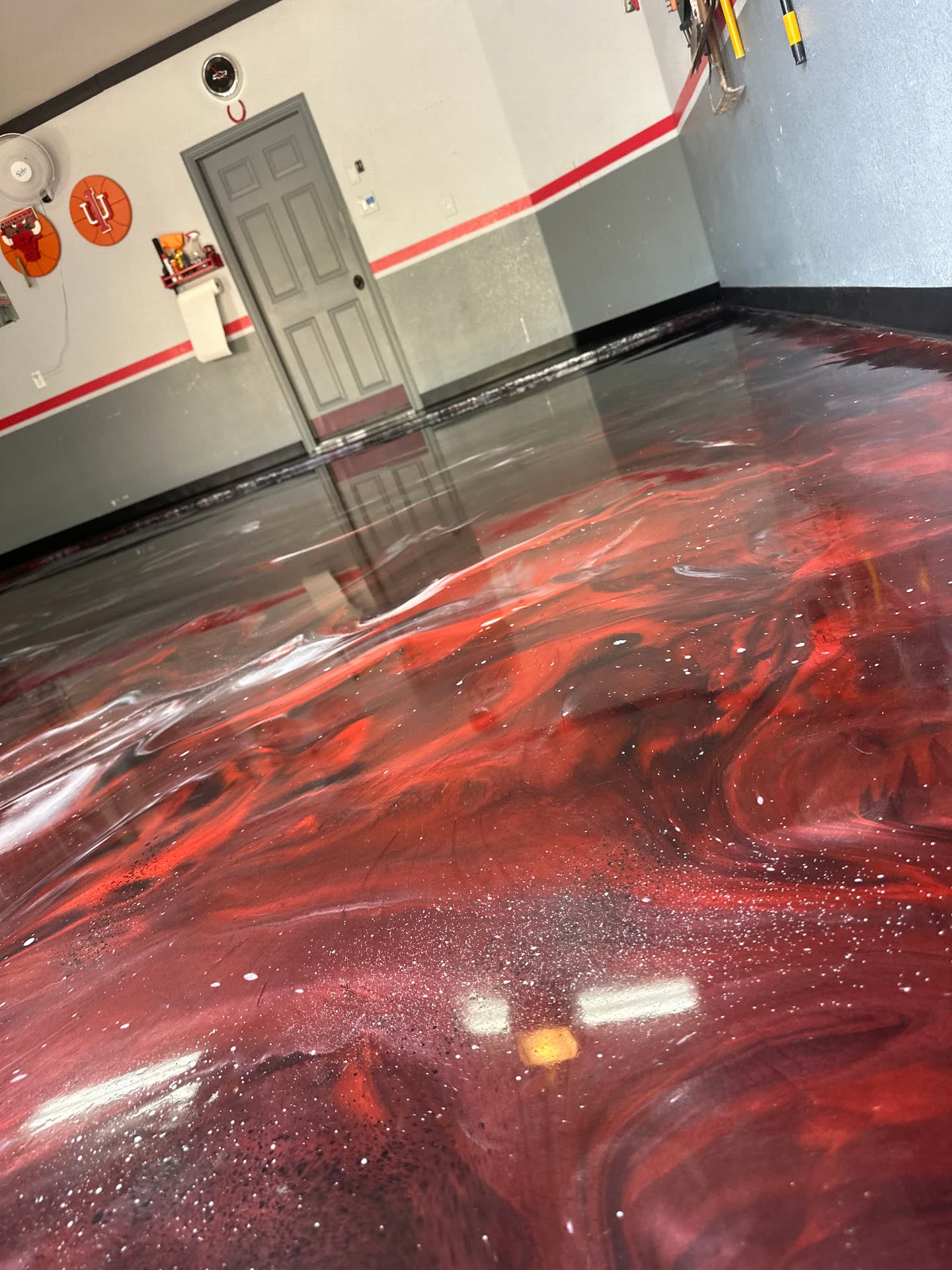
Metallic epoxy offers a different direction for an interior-style bay or display garage. Pigment movement and reflections depend on lighting and application, so compare samples under the light you actually use. A restrained solid-color system may suit owners who want the contents of the garage to remain the visual focus. Review vehicle use, cleaning products, and movable equipment for any of these options; design does not replace a traffic-specific coating specification.
Budget and Prepare for Your Dallas Garage Estimate
A standard two-car garage often lands around $3,500–$6,000. Typical DFW flake epoxy ranges are $7–$12 / sq ft, and metallic epoxy ranges are $12–$18 / sq ft. Slab condition, repairs, access, and system choice can change the total. These published metallic and flake ranges include MVB. Do not add the separately listed $2.50–$4 / sq ft MVB range again to a quote that already includes that layer.
Many residential projects fit a 2–3 day installation window, with return to foot and vehicle use confirmed for the selected materials and conditions. Share square footage, floor photos, previous treatments, parking needs, and the Dallas neighborhood. Clear the slab and arrange storage before preparation begins. The Dallas epoxy floors page covers other resin applications, the neighborhood guide explains local slab differences, and the cost guide gives published DFW planning ranges before a free on-site estimate.