
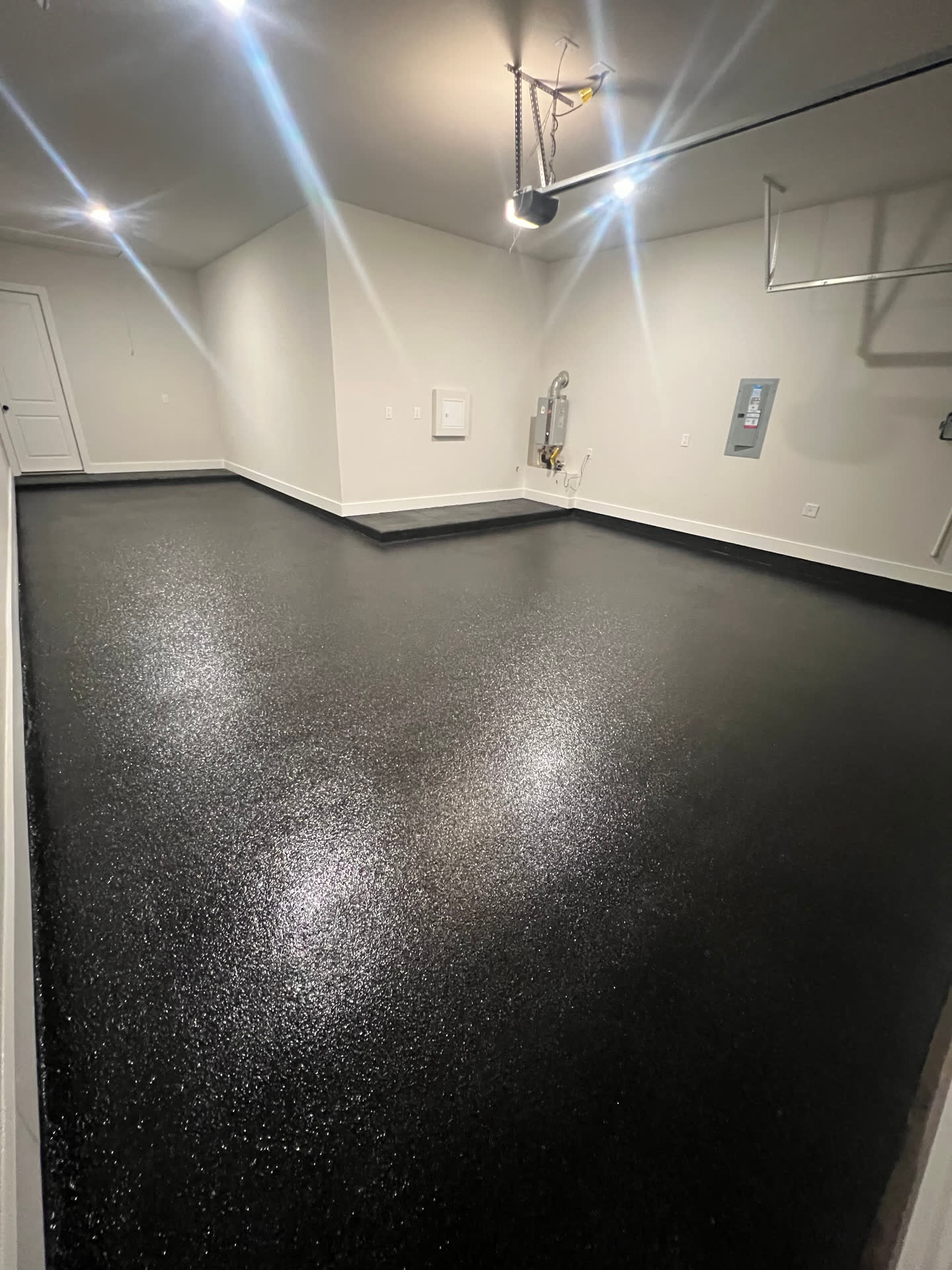
Older Fort Worth Garages: Inspect Before Choosing a Finish
A garage around Fairmount, Arlington Heights, or Ridglea may have been used for parking, storage, and workshop tasks at different times. Old paint, sealers, patches, and worn edges can remain from those uses. The assessment identifies incompatible layers and areas that need repair before a new resin system is specified. Apparent surface cleanliness does not confirm adhesion below an earlier coating, and a fresh chip broadcast cannot compensate for an unsuitable base.
We review joints and cracks separately from ordinary pitting. Active movement or damaged concrete may need evaluation beyond a coating installation. Ask whether water enters at the door and whether previous repairs changed the threshold or surface levels. Those conditions shape the preparation and suitability review. The Fort Worth neighborhood guide below explains more of the local slab context, while this page focuses on garage parking, storage, and workshop decisions.
Detached Buildings Need Their Own Moisture and Access Review
A detached garage or shop behind an established Fort Worth home may sit at a different elevation from the house. Roof runoff, drainage near the doorway, and the approach for equipment should be checked independently. Construction records can provide useful context, but they do not replace moisture assessment. We include an MVB on every slab we coat, while keeping water-entry corrections and structural concerns separate from the decorative resin scope.
A narrow side drive or shared yard can change how grinding equipment reaches the concrete and where belongings can be stored. Door widths, steps, fixed benches, and electrical or utility equipment all belong in the planning conversation. Send photos of the approach, not only close-ups of the floor. A practical access review helps define the work window without assuming that a detached building can be prepared in the same way as an open attached garage.
Clay, Threshold Water, and Mechanical Preparation
North Texas clay and seasonal moisture changes provide context for a slab-on-grade garage, but the individual floor still needs testing and inspection. A dry-looking surface does not describe conditions beneath it. We mechanically profile the concrete and review previous treatments before installing the specified barrier and coating layers. The MVB manages vapor at the coating system; it is not a means of correcting water flowing through a door or an unresolved drainage problem.
Diamond grinding, edge work, and removal of incompatible coatings establish the bond surface. Crack and stain assessment identify additional preparation rather than promising that every mark can be hidden. Oil-soaked concrete may need extra work or affect suitability. Keep the slab clear so those areas can be inspected, and discuss repairs before the decorative finish is chosen. The scope should explain what happens underneath the flake or metallic layer as clearly as the final color.
Fort Worth Parking Garages and Hobby Shops Use Floors Differently
Daily vehicle parking brings grit, warm tires, and water to the garage. A woodworking or hobby bay adds rolling cabinets, sawdust, dropped tools, and concentrated loads. Tell us how each area is used, including mats, cleaners, and any spills. A flake epoxy floor can offer a patterned finish with texture selected for those routines. Our catalog includes 57 Torginol blends, allowing samples to be compared against cabinets and the building's existing colors.
Metallic epoxy can suit a display bay or a studio where pigment movement is part of the design, while solid-color epoxy provides a simpler visual direction. More texture may support traction near a wet threshold but can also change mopping and debris removal. No finish is slip-proof or a substitute for equipment mats and careful handling. The topcoat and resin buildup should fit the actual traffic rather than an assumption based on a garage's size.
Alliance-Area Shop Bays: Know When the Brief Becomes Commercial
A north Fort Worth bay used for a business is not automatically a residential garage project. Service equipment, pallet jacks, oils, coolants, and cleaning chemicals can require a purpose-specified commercial system. List products and loads, including where equipment turns or remains stationary. Chemical resistance depends on the selected materials and exposure, so a general epoxy label does not establish suitability for every shop product.
Operating access matters just as much. Determine whether one bay can be isolated, how deliveries will be handled, and which equipment cannot be moved. Preparation and cure still need their required windows, even when a shop has a short quiet period. If the actual use is commercial or light industrial, our commercial epoxy floors page explains specification and cost factors. Keep that distinction clear before comparing a home-garage budget with a working service bay.
Fort Worth Garage Costs and a Realistic Work Window
The published typical DFW budget for a standard two-car garage is around $3,500–$6,000. Flake epoxy ranges are $7–$12 / sq ft, and metallic epoxy ranges are $12–$18 / sq ft. These planning ranges vary with slab condition, repairs, access, and system choice. Older coating removal or a difficult detached-building approach can change the scope. MVB is already included in our metallic and flake ranges rather than charged again on top of those figures.
Many residential installations fit a 2–3 day work window, but preparation-heavy slabs and material requirements may change the schedule. Vehicle return follows the project's cure instructions, not simply the day the crew finishes. Arrange parking and storage, clear the concrete, and share the property's floor history and approximate area. Use the linked DFW cost guide and Fort Worth epoxy floors overview to compare options, then request a free estimate for the actual garage or shop.