
Start with the Fort Worth Property, Not a Generic System
Fort Worth has several distinct coating briefs. A home around TCU or Near Southside may have an existing garage with patched concrete and limited equipment access. A west-side property may combine parking, cabinets, and a hobby area. Along the Alliance and north Fort Worth corridors, a shop or flex building can bring loading routes, equipment, and chemical exposure. These examples describe local planning conditions, not claims about completed jobs at particular addresses.
An on-site review establishes what the slab needs before a finish is selected. Tell us what was previously applied, where water enters, what crosses the floor, and when the area can be cleared. The useful comparison is between complete scopes: removal, repairs, mechanical preparation, vapor control, decorative layers, and topcoat. A resin name alone does not explain whether a floor is appropriate for a detached garage or a working commercial bay.
Older Central Fort Worth Concrete: Separate Cosmetic and Slab Concerns
Established streets near Fairmount and central Fort Worth can include garages or converted spaces with several generations of floor treatment. Paint, sealer, old adhesive, and patch materials may be visible only after a close inspection. We identify incompatible layers for removal and assess edges, joints, and pitting before coating. Where an unidentified old adhesive needs evaluation, that comes before mechanical removal rather than treating every residue as ordinary concrete dust.
A decorative floor cannot correct a moving slab or water entering through a threshold. Cracks must be assessed so a surface repair is not confused with a structural remedy. Moisture still matters on older concrete; age is not proof that the bond line is suitable. Diamond grinding creates the profile required by the specified material, and an MVB goes beneath the coating. Preparation on an established property can therefore be a larger part of the estimate than color selection.
Garages, Detached Buildings, and West-Side Hobby Spaces
For daily parking, flake epoxy floors offer decorative chips with a texture selected for the space. A garage near Ridglea or Tanglewood may also contain a workbench, utility equipment, or rolling cabinets. List those uses during the walkthrough, including any cleaners, oil, or water exposure. A detached building near TCU may need a separate review of drainage, door clearances, and the approach for grinding equipment instead of borrowing the house garage's preparation plan.
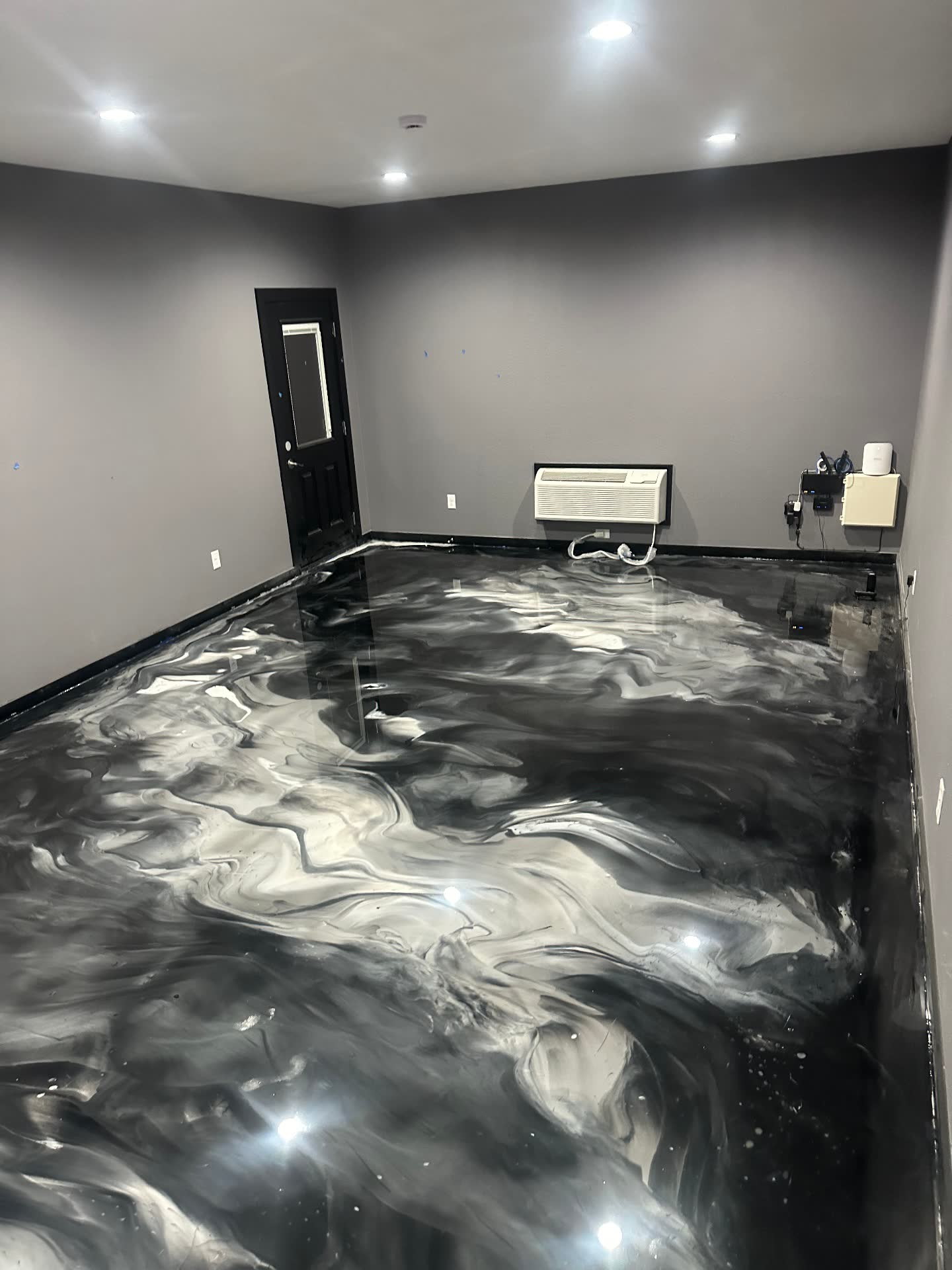
Metallic epoxy can be considered for a show bay, studio, or interior where pigment movement supports the design. Compare samples under the actual lighting and against fixed surfaces. Solid-color or purpose-specified commercial epoxy may be appropriate where a shop's operation matters more than a decorative pattern. The Fort Worth garage page below explains parking and workshop decisions in more detail, while the neighborhood guide covers local slab history and access.
Alliance and North Fort Worth Commercial Epoxy Floors
Commercial work needs an exposure list rather than a general request for a strong floor. Identify forklift paths, pallet-jack turns, point loads, cleaning chemicals, oils, and areas that receive repeated wet cleaning. The chosen resin, film build, and topcoat should match those conditions. We do not assign a universal mil thickness to every shop: the product specification and intended duty determine the required layers and coverage.
Access is another part of the system design. A bay that can be isolated may allow phased work; a shared delivery aisle may require a different sequence. Identify entrances, storage areas, and equipment that cannot be relocated before scheduling preparation. Cure requirements continue to apply during quiet operating periods. An evening access window is helpful information, but it is not permission to return loaded equipment before the selected materials are ready.
Interiors, Patios, and Exterior Transitions
A metallic lobby or creative interior has a different visual brief from a warehouse aisle. Gloss, reflections, pigment contrast, and the surrounding lighting affect the sample discussion. Cleaning and traffic still matter in a decorative space, especially where carts or public entrances meet the floor. Flake can offer a quieter patterned alternative. Compare the service pages for the finish you want instead of treating every epoxy floor as the same application with a different color.
Fort Worth driveways and patios need an exterior review of sunlight, drainage, slope, and vehicle or pedestrian contact. An interior garage coating should not simply be continued outside without assessing the topcoat and exposure. Discuss thresholds, steps, edges, and wet areas, including pool-deck transitions where relevant. Texture can improve traction, but no finish removes the need to handle standing water or correct drainage. Our exterior page explains driveway and patio coating choices.
Costs and Scheduling for Fort Worth Epoxy Floors
Typical DFW ranges are $7–$12 / sq ft for flake epoxy, $12–$18 / sq ft for metallic epoxy, $8–$15 / sq ft for commercial or industrial epoxy, and $9–$14 / sq ft for driveway flake coating. Actual totals vary with slab condition, repairs, access, and system choice. Metallic and flake ranges already include the moisture vapor barrier. The linked DFW cost guide explains the published ranges without substituting a price list for an on-site review.
Many residential coating projects fit a 2–3 day installation window, but older surface removal, repairs, and material requirements can extend the work. Commercial phasing and exterior weather introduce different scheduling constraints. Send the approximate area, photos of the slab and access, the property's use, and preferred timing. We serve Fort Worth as part of our DFW service area, with business hours from 7 AM–10 PM daily and free estimates for the actual floor.