
Warehouse & Commercial Floors in DFW: Concrete Polishing or Epoxy?
Choosing between warehouse concrete polishing and commercial epoxy comes down to traffic, spills, joints, moisture, marking needs and how much downtime your Dallas–Fort Worth facility can absorb. Red Diamond Epoxy installs epoxy systems; Diamond Flooring Solutions, a separate brand under the same ownership, handles mechanical polishing.
The Short Answer
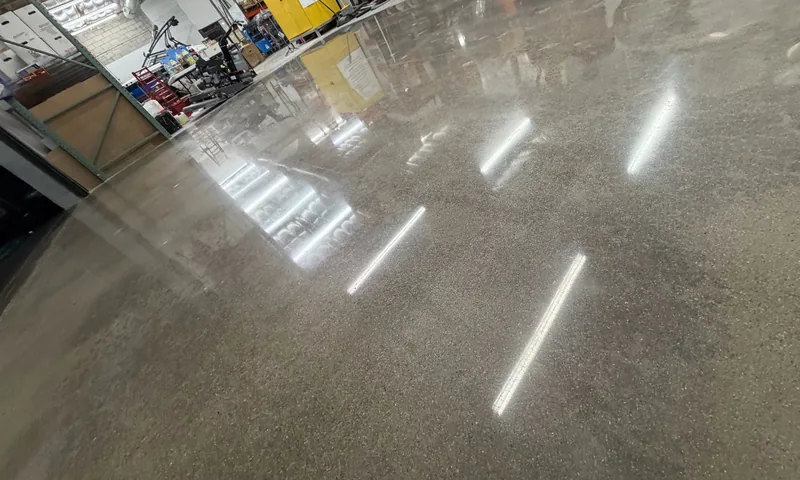
Polished concrete tends to fit sound, dry warehouse slabs where a natural concrete look, light reflectivity and a simple cleaning routine are the priorities. Commercial epoxy tends to fit floors that see oil, chemicals or frequent spills, need color-coded zones and built-in striping, or need texture in wet areas.
Many facilities do not need one answer everywhere: a polished storage area and coated production, charging or wash-down zones can work together. The slab assessment decides.
Forklift, Pallet-Jack and Cart Traffic
Wheeled traffic is usually the deciding factor in a warehouse. Hard forklift tires, pallet jacks and carts concentrate load on a small contact area, and the heaviest wear tends to follow the same lanes: dock doors, turning points at aisle ends and the approaches to racking.
A mechanically polished floor refines and densifies the slab itself, so there is no coating layer to wear through; its condition depends on the quality of the concrete underneath. An epoxy system adds a bonded resin surface whose build and topcoat are selected for the traffic expected. Either way, damaged traffic lanes, spalls and soft surface concrete must be repaired first; neither system hides a failing slab.
Joints and Joint Filler
Saw-cut control joints and construction joints are where many warehouse floors start to break down. Open joints let wheels drop and strike the edges, which chips the concrete and gradually widens the gap.
Before polishing or coating, joints should be cleaned out and evaluated. Some are filled with a semi-rigid filler that supports wheel traffic; joints that are still moving may need a different approach. With epoxy, the coating is typically detailed at the joints rather than bridged over them blindly. With polishing, the filler is ground flush as part of the process. Planning joints early avoids surprises after the floor is back in service.
Chemical, Oil and Spill Exposure
Look honestly at what reaches the floor: hydraulic fluid from equipment, motor oil, cleaning chemicals, beverages, food products or battery-charging areas. Concrete is porous, and while a polished, densified surface with a guard resists many everyday spills, aggressive or frequent spills can still stain or etch it.
A resin coating creates a sealed surface between the spill and the slab. The right chemistry and topcoat depend on the substances involved, so we ask for a list of chemicals and cleaning products during the assessment rather than assuming one product fits every facility.
Dust Control and Cleaning
Untreated concrete sheds fine dust as it wears, which ends up on stock, equipment and shelving. Both systems address that. Polishing densifies and tightens the surface, and an epoxy coating seals the slab under a resin layer.
Daily care is similar in principle: remove grit regularly, because abrasive debris under wheels wears any floor faster, and use cleaners compatible with the finish. Auto-scrubbers are common on both. Your cleaning crew should know whether the floor has a polish guard or a resin topcoat so pads and chemicals are chosen correctly.
Line Striping and Safety Marking
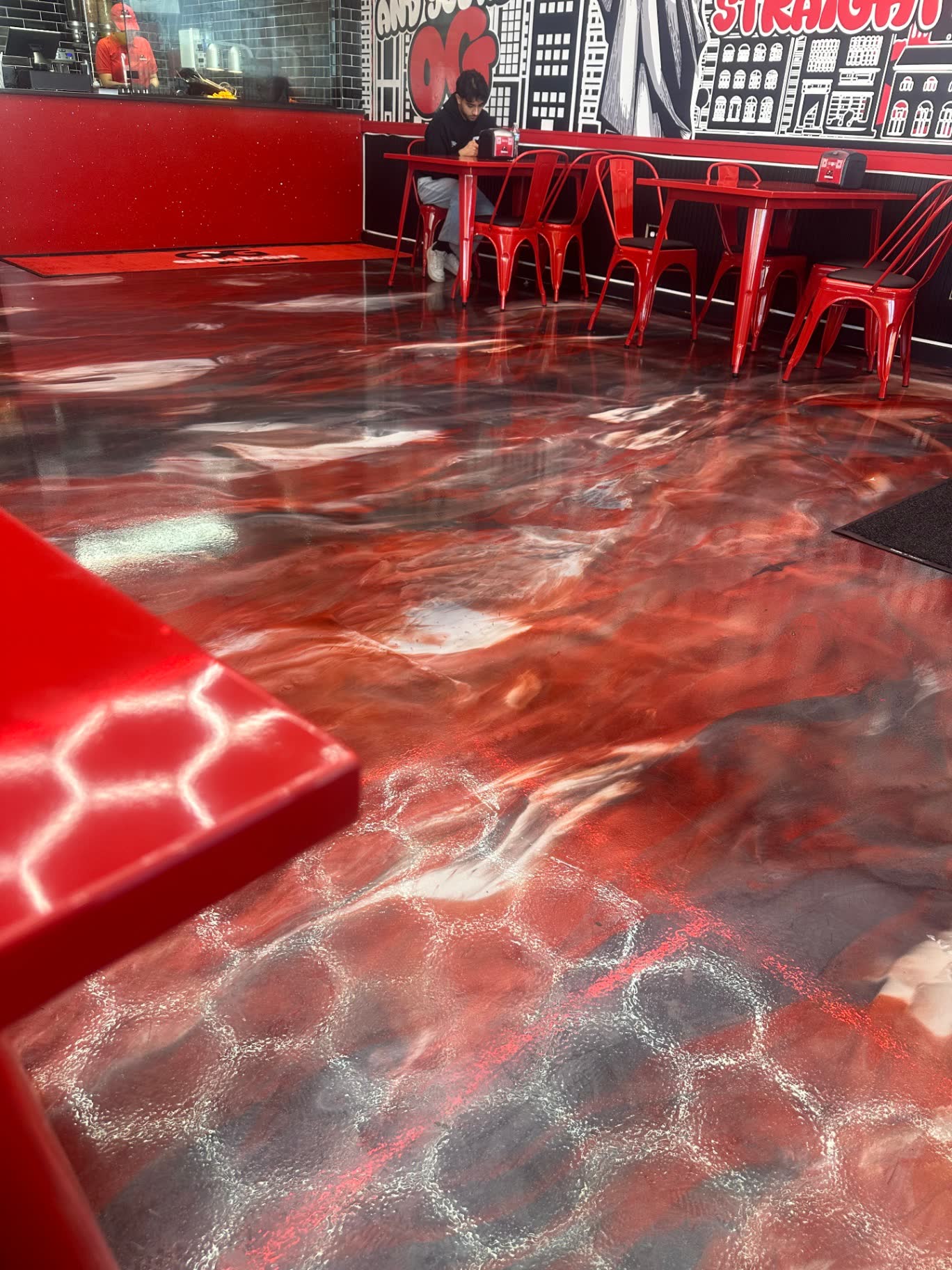
Aisles, pedestrian walkways, forklift lanes, staging areas and hazard zones all need clear marking. Epoxy makes this straightforward: color zones and lines can be built into the coating system, and the whole floor can be a lighter color to separate work areas visually.
Polished concrete can also be striped, but the marking product must be suited to a dense, polished surface. Either way, agree the layout before work starts so lines align with racking and traffic plans.
Slip Considerations: Wet Areas and Textured Epoxy
Slip resistance depends on the surface, any contamination on it and the footwear and tires in use. A highly polished floor or a smooth, glossy coating can become slippery when wet or oily, so wet zones, wash-down areas, ramps and dock entries deserve special attention.
Epoxy systems can include textured or broadcast aggregate in specific areas, so a facility can have more traction where it is needed and a smoother finish elsewhere. On polished floors, a lower sheen and a strict spill-response routine help. We discuss texture by zone rather than applying one finish everywhere.
Moisture Vapor in the Slab
Moisture moving up through a slab matters much more for coatings than for polishing. Excess vapor can push against a resin coating and lead to bubbling or loss of bond, which is why moisture testing is part of every epoxy assessment. Where readings call for it, a moisture vapor barrier for epoxy floors is installed as part of the system.
Polishing works within the concrete, so it is less sensitive to vapor, although moisture can still affect densifiers, guards and stain products.
Downtime and Phasing in Operating Facilities
Few warehouses can close for an extended period. Both systems can be scheduled in sections, but they differ in how the floor returns to use. Polishing involves multiple grinding passes and generates slurry or dust that must be controlled, yet the floor can generally carry traffic soon after the final passes. Epoxy requires preparation, application and cure time before foot traffic and before forklifts.
We map zones, moves of stock and racking, access routes, nights or weekends and return-to-traffic timing after seeing the floor and your schedule, rather than promising a timeline in advance.
Lighting and Reflectivity
A brighter floor can make a warehouse feel better lit and make it easier to see debris. Polished concrete reflects more light as sheen increases, while the natural gray tone of the slab remains. Epoxy can be specified in lighter colors with a gloss or satin finish, which also brightens the space and supports color-coded areas.
High reflectivity is not always desirable: glare under certain fixtures can be distracting, so the sheen should be chosen with your lighting layout in mind.
When Commercial Epoxy Is the Better Fit
- Oil, hydraulic fluid, chemicals or frequent spills reach the floor.
- You want color zones, built-in striping or a lighter floor color.
- Wet or wash-down areas need textured traction.
- The slab is worn, stained or patched and needs a uniform finish.
When Mechanical Polishing Is the Better Fit
- The slab is sound, with limited spills and mostly dry traffic.
- You prefer the natural concrete look and its variation.
- Moisture readings are a concern for a coating.
- Return to traffic soon after the final passes is the priority.
Diamond Flooring Solutions, our sister brand, handles polished concrete and commercial concrete polishing.
How the Assessment Works
- Walk the floor with your team to note traffic lanes, docks, racking, wet zones and spill sources.
- Check slab condition: cracks, spalls, joints, existing coatings and surface hardness.
- Test moisture where a coating is being considered.
- Discuss marking, texture, sheen and appearance goals.
- Plan phasing, access and return-to-traffic timing around your operation.
- Recommend epoxy from Red Diamond Epoxy, or refer polishing to Diamond Flooring Solutions.
Warehouse Flooring FAQs
Is polished concrete or epoxy better for a forklift warehouse?
Can you stripe aisles on polished concrete?
Do floor joints need attention before polishing or epoxy?
Can work be phased while our facility stays open?
Who handles polishing if that is the better fit?
For a broader comparison, read polished concrete vs epoxy floors.
Plan Your Warehouse Floor
Book a free on-site assessment anywhere in Dallas–Fort Worth, or call to talk through your facility.